
Arrest Warrants in Washoe County
Two statutes govern how a Washoe County arrest warrant gets issued. Under NRS 171.106, a magistrate weighs probable cause drawn from a complaint or affidavit before deciding on a warrant or a summons. NRS 171.108 then requires a written State of Nevada order that names the offense, identifies the defendant or gives a description, and carries the magistrate's signature or office. Where the warrant lives depends on the case. A Washoe County warrant may sit in a district, justice, or municipal court record. You will also see different labels. The Second Judicial District criminal instructions use the phrase "warrant of arrest," while justice-court and municipal pages may say arrest warrant, active warrant, or something similar. The current court entry always controls, though a public case result can be incomplete and may omit a sealed complaint or affidavit. The official Nevada warrant statute is the primary legal source for issuance and contents.
Probable Cause and the Nevada Magistrate
Probable cause is a practical test. It asks whether the facts give the magistrate reason to believe an offense happened and that the named person committed it. The complaint or affidavit supplies those facts, and the statute lets the magistrate respond with a warrant or a summons. Court files can show the warrant event and the offense while the affidavit behind it stays sealed from public view. Washoe County's court structure adds a routing wrinkle. District court handles felonies on its own track, apart from Reno and Sparks Justice Court, where misdemeanor, gross-misdemeanor, traffic, and preliminary matters land. City misdemeanor and code cases can remain in Reno or Sparks Municipal Court instead. Ask the clerk which court issued the order before picking a payment or surrender route. For felony context, the Second Judicial District case portal is the tool to use. It is not a warrant-only database.
What a Washoe County Arrest Warrant Contains
What goes into the paper? The written order and the Washoe County court record can identify the issuing court, the offense, the defendant or a description, the magistrate, the case number, status, and the serving agency. Bond or bail may be set separately. Keep in mind that the public portal may not display every field, and a financial tab can leave out a warrant amount.
| Warrant identifier | Court case number and, where assigned, warrant or order identifier. |
|---|---|
| Offense | Charge or classification tied to the probable-cause record. |
| Issuing authority | District, justice, or municipal court and the judge or magistrate. |
| Basis | Complaint, affidavit, citation, or other probable-cause record. |
| Bond or bail | Cash, surety, OR, no bond, or a court-specific amount, subject to confirmation. |
| Service status | Active, served, recalled, quashed, or cleared, with dates when shown. |
Read the warrant field next to the docket, then call the issuing court in Washoe County. A case number by itself never proves an active arrest warrant.
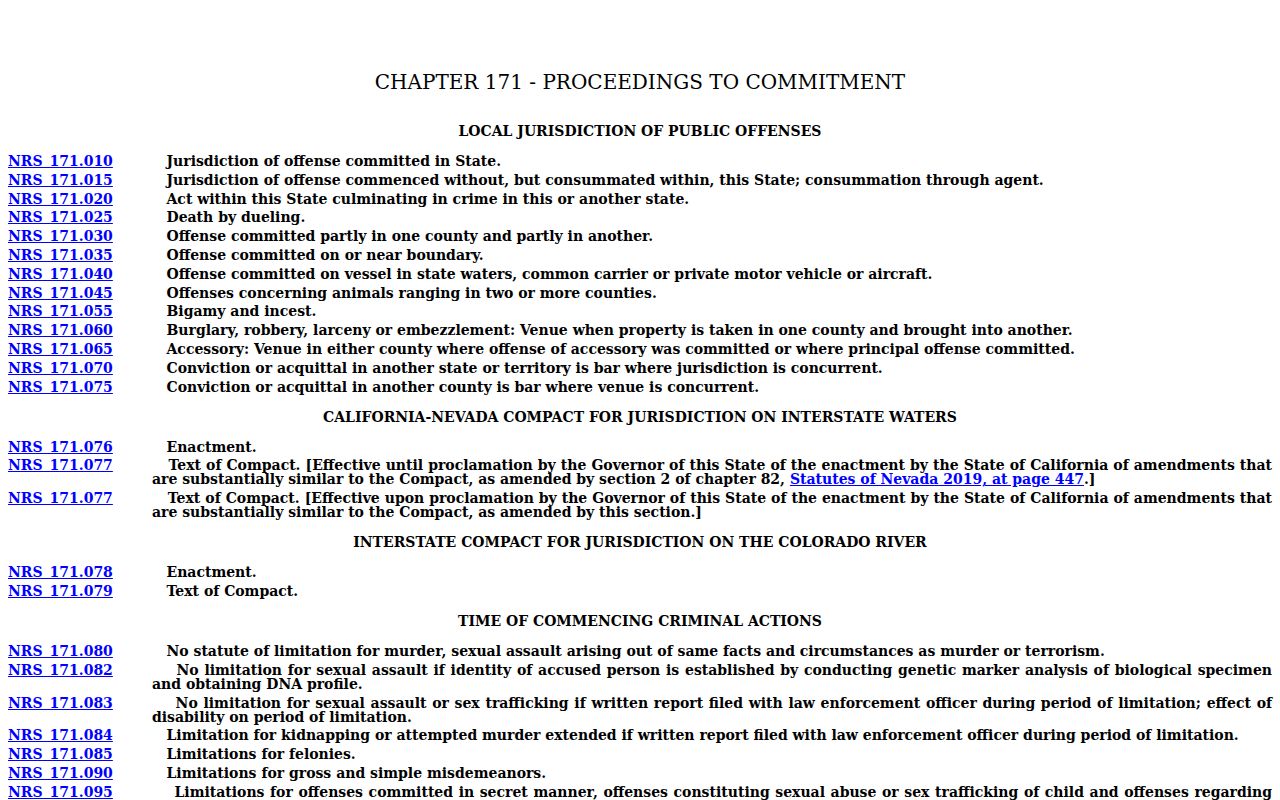
The statute page supplies the rule text, while the Washoe County court supplies the live case status a reader actually needs.
WCSO, Police, and Municipal Marshals
Jurisdiction decides who serves the order. WCSO lists Warrants at (775) 328-3398 and detention at 911 Parr Boulevard. Reno and Sparks police can take enforcement action or route records, though the Reno Police Records page sends warrant-status questions back to the originating court. City court warrants are handled by Reno Municipal and Sparks Municipal marshals. Constables and other peace officers in Washoe County may serve an order too.
A sheriff or marshal can walk you through service and custody logistics, but the issuing judge controls the warrant. The Washoe County Clerk location page shows where the district-court records office sits.
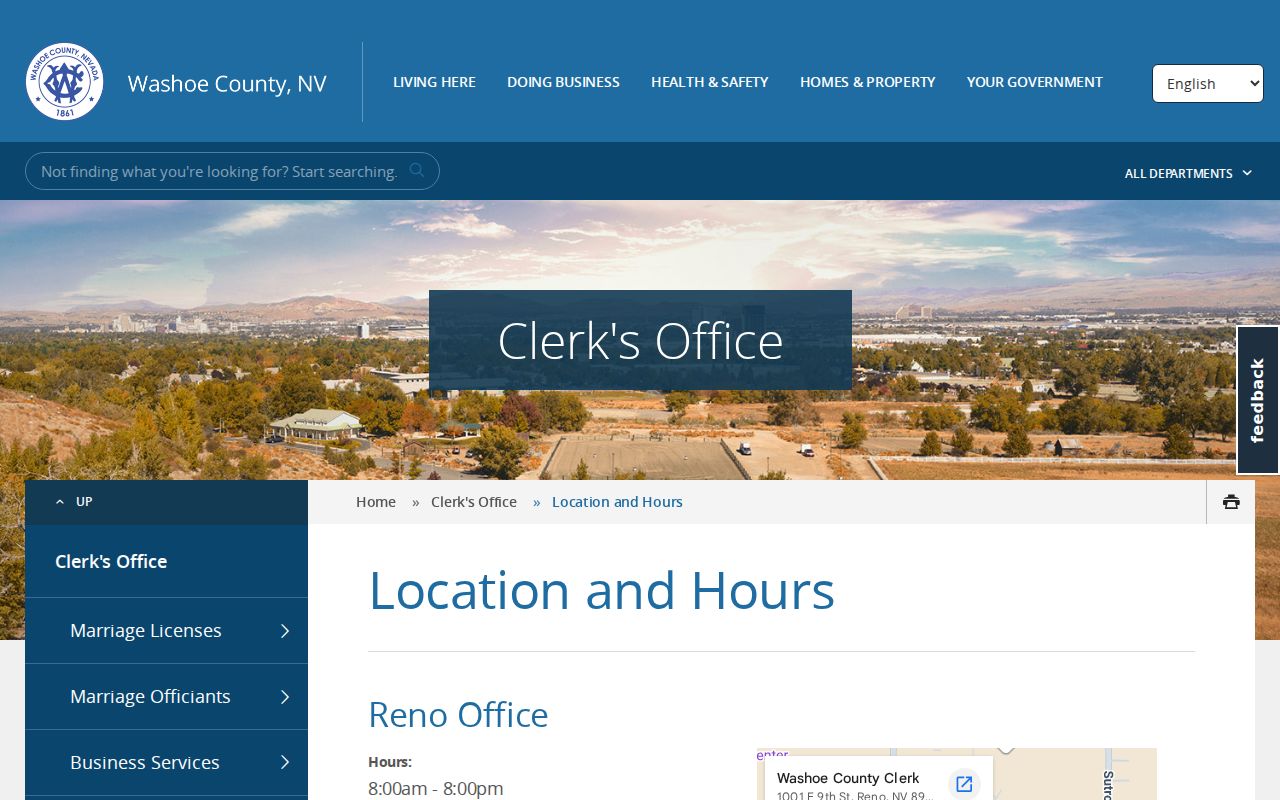
One office, one court. The Washoe County Clerk serves as ex officio clerk of the district court, not as a single clerk for every local warrant.
How Washoe County Arrest Warrants Are Served
Once a Washoe County court issues a warrant, the order moves through the docket to a peace officer or serving agency. Service can happen during a lawful contact, at a surrender, or through another authorized process. An active warrant exposes a person to arrest 24 hours a day, even at a courthouse. The published self-surrender site is the Washoe County Detention Facility at 911 Parr Boulevard. Call first for current instructions. Out-of-state and federal warrants follow a different layer. WCSO Consolidated Extraditions lists (775) 785-6202 for extradition matters, and federal warrants run through federal court and the U.S. Marshals Service rather than a Washoe County portal. For that question, use USMS District of Nevada or the federal court.
Arrest Warrant, Summons, or Bench Warrant
These words name three distinct court actions in Washoe County. A summons simply orders you to appear. An arrest warrant goes further, letting an officer take someone into custody once probable cause exists. A bench warrant is the response to a missed court date or some other failure to comply in a case already open. The label on the paperwork matters, so ask the court for the exact term used.
| Order | Local trigger | First confirmation |
|---|---|---|
| Summons | Court or prosecutor uses an appearance process instead of immediate arrest authority. | Issuing court docket or clerk. |
| Arrest warrant | Probable cause under NRS 171.106 and required written contents under NRS 171.108. | Issuing court and WCSO or serving agency. |
| Bench warrant | FTA, missed setting, payment, program, or other court noncompliance. | Issuing court's criminal, citation, or municipal department. |
In Washoe County, a vague "warrant" label settles nothing, so request the court's exact term and remedy.
Self-Surrender at 911 Parr Boulevard
Call first. Reach the issuing Washoe County court or a lawyer before you turn yourself in. Ask about current bail, whether an appearance is mandatory, booking, hearing timing, transport, and which documents to bring. Reno Justice may demand an Order to Show Cause for a bench warrant. Sparks Justice, meanwhile, splits its FTA, failure-to-comply, and arrest-warrant routes apart. A municipal court might permit bail, a motion, post-and-forfeit, or surrender, depending on the case.
Use official numbers only: Court scam warnings say official offices do not unexpectedly text or email warrant documents or demand gift cards, crypto, wire transfers, or surprise phone payment.
The Sparks Justice criminal instructions lay out the arrest-warrant booking route in Washoe County and separate it from FTA resolution. Remember, the jail is a custody site, not a stand-in for a court order. The official Reno Justice warrant instructions follow.
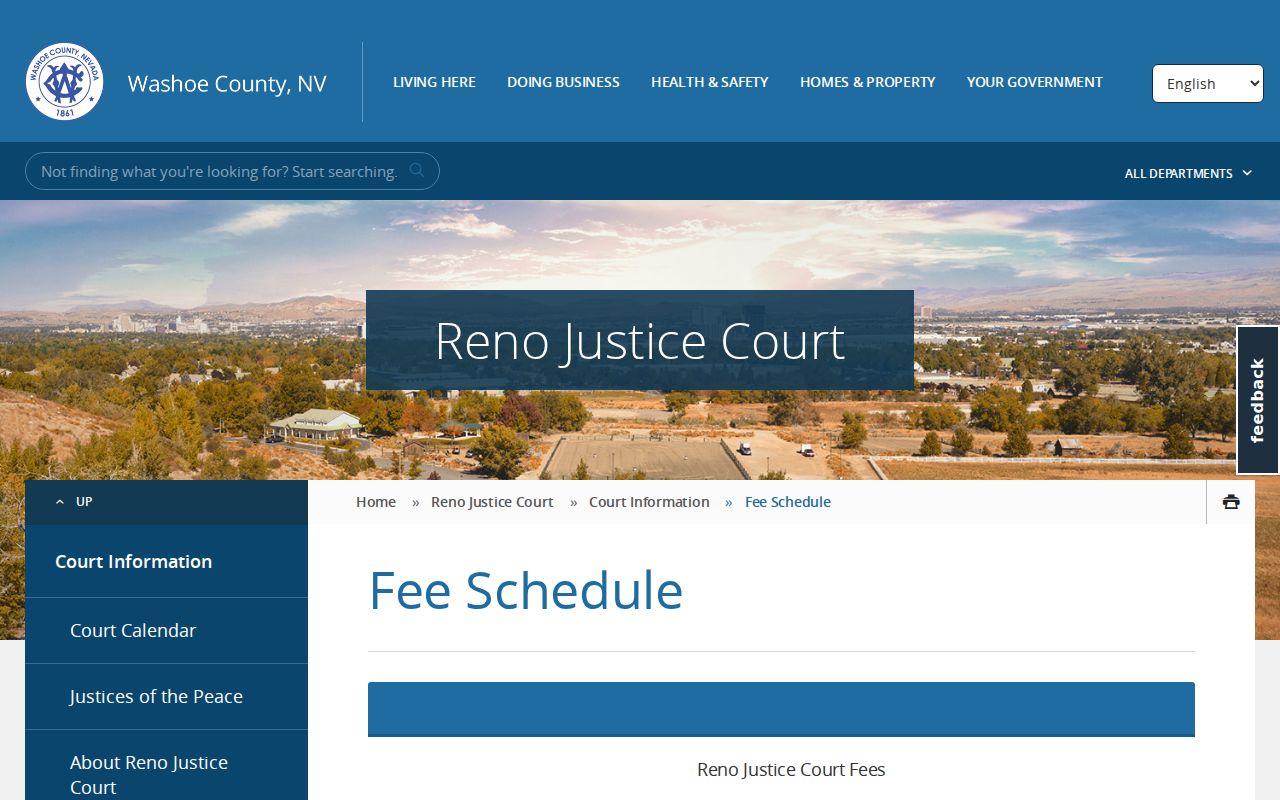
Confirm the court's current route before relying on a payment or walk-in plan.
How to Resolve a Washoe County Arrest Warrant
Pick up the phone first. Call the court that issued the Washoe County warrant and ask whether it is still active, whether you must appear before a judge, what bail it accepts, and whether self-surrender is required. Bail types matter. Ask about cash, surety, or release on your own recognizance; Reno Municipal Court, for example, lists cash or surety bail, possible OR release, and a $50 court bond fee. That is one court's rule. Read it as municipal policy, not a countywide bond schedule for every Washoe County court. After booking or bail, gather your paperwork. Get the case date, the receipt, the bond documents, and the warrant recall or clearance status in writing. Bail settles release, not the charge, and a judge may still set a hearing, motion, plea, or trial before the case closes.
Federal and Sealed Warrant Limits
Federal warrants stay out of the Washoe County portals run by Reno, Sparks, Incline, Wadsworth, and WCSO. That world is separate. The U.S. District Court for Nevada and PACER are the right starting points, and PACER can show public federal docket context even when sealed complaints and warrant affidavits do not appear. CourtListener and RECAP offer free copies of some filings. Neither counts as a warrant-status list. Sealed, confidential, juvenile, and active-investigation records at the state and local level can be withheld too. A blank search proves nothing. For a Washoe County sealed matter, ask the court clerk or a defense attorney which access and resolution path actually applies.
Read the Arrest Status Carefully
Read status labels closely. In Washoe County records, "warrant issued" marks an event, while "active" usually means the court or agency has entered no recall, quash, service, or other clearance. "Served" means execution occurred. "Recalled" and "quashed" are court actions, and a public status can lag a hearing or payment, so ask the clerk whether WCSO, DMV, or another agency was notified.
- Probable cause
- Facts that give a magistrate a reasonable basis to believe an offense occurred and the person committed it.
- Warrant of arrest
- The local phrase used by district-court criminal instructions for an arrest order.
- Magistrate
- A judicial officer who can review probable cause, issue an order, set bail, or conduct an initial proceeding.
- Service
- Execution of the warrant by an authorized officer.
- Recall
- The issuing court withdraws the warrant.
Keep the court's direct answer with the case number and date of the call.